Group Proposal Project
The Beaver’s Dam
Dream Student Center at the City College of New York
March 6th 2025
Beavers United:
Adam Elalouani
Perry Lisker
Haluk Yavas
Khaled Elsayed
Introduction:
What is a student center? By Definition, it’s a space designed to serve the social and academic needs of a student body, a home base that brings people together and supports collaboration in the overall college experience. Now, I want you to ask yourself: Can a campus truly feel like a community if students have nowhere to connect or even relax? Can they not simply be themselves outside of the classroom?
Here’s a fact: Nearly 70% of urban college students, like City College of New York, report feeling disconnected from their campus communities. This isn’t just a statistic; it reflects a deeper issue. Despite its rich history and diverse student body, City College lacks one element: a centralized student hub. Currently, Students are left to navigate a campus experience. Breaks between classes are often spent in hallways and outdated lounges, searching for places to sit, places like the cafeteria. Many end up leaving to go to cafe shops nearby or to pizzerias. This lack of shared space isn’t just inconvenient, it’s a major issue most students face. It lowers school spirit, limits student engagement, and reduces networking opportunities. As one quote reminds us, “You don’t build community with concrete; you build it with people—and give them a place to meet.” Without a student center, City College Students are missing that space.
Take a typical day on campus. A Student finishes class and wants to grab lunch, charge their laptop, and even catch up on assignments. But there’s no consistent, welcoming space to do that. Instead, they wander from floor to floor, hoping to find an open seat. Campus life should feel like a scavenger hunt. That’s why our team, Beaver United, is proposing the design and construction of a modern, multifunctional student center, an inclusive space that will serve as City College’s social heart. This proposal outlines the current challenges students face daily, explains why a student center is essential to improving campus life, and presents an innovative plan to bring this vision to life. Because, at the end of the day, a student body without a student center is nothing but a crowd with no heartbeat—full of potential but lacking the space to truly be socialized and heard.
Action Plan:
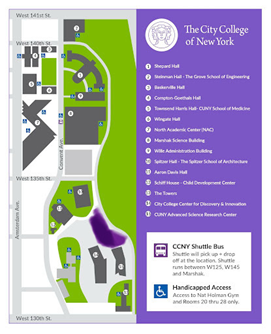
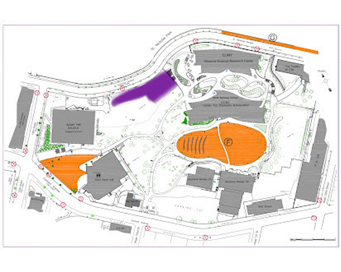
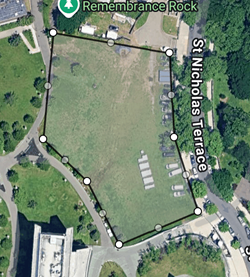
Our student center will be located on the South Campus of CCNY between Spitzer Hall (10) and City College Center for Discovery & Innovation (14).
The outlined area is 56,008 square feet. However, our building will be about 45,000 square feet, leaving the rest for landscaping.
First/ Ground floor – Reception, food, cafeteria, restaurant, food hall.
Second floor – Has privacy pods, A study area, and a Maker Space.
Third floor – Communal space, foosball table, clubs, PS5, gaming room, pool table, VR room.
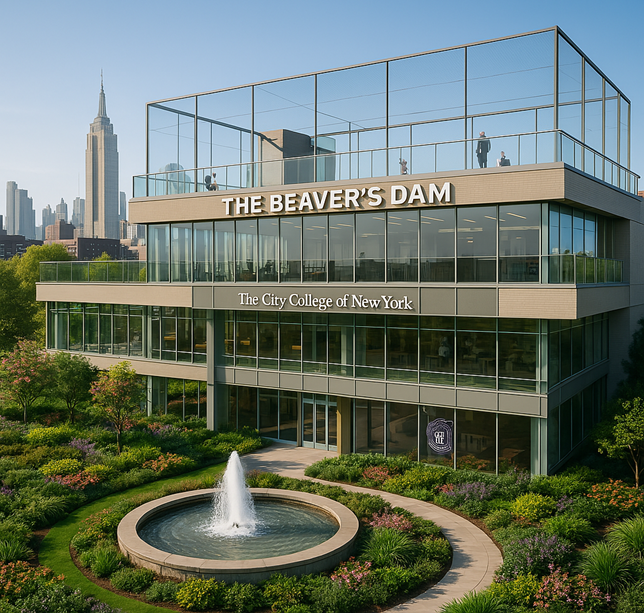
Trees, benches, and outdoor paths will surround the building. Ramp access and bike racks will also be provided. A water fountain will be installed in front of the building.
When you first enter the Student Center, you will be met with a reception desk for any quick questions or reservations. Past the reception desk will be a giant food hall with multiple popular fast food restaurants and a pop-up kitchen with cuisine from around the world every week. Every week, a new cuisine from around the world will be the speciality. If you get a food coma and feel sleepy after eating, nap pods are available if you go downstairs to the basement. There is also a mini grocery/deli with essentials for students, including school supplies, snacks, and drinks. There is also a creative art studio, a space for painting, sketching, digital art, and group projects with materials provided. (Appendix A)
The second floor will mainly be a study area where there will be soundproof privacy pods as well as study lounges with bean bags, couches, desks, whiteboards, and charging ports. On the other side of the second floor, a maker space and innovation lab will be equipped with 3d printers, soldering stations, CNC tools, and prototyping gear. (Appendix B)
The main focus of the third floor will be a communal space with a retro arcade, foosball and pool tables, gaming rooms with PC’s and consoles, and a VR room. There will also be rooms for club meetings. There will also be a small event stage for group gatherings or large meetings. (Appendix C)
On the fourth floor, the top level of our student center’s rooftop, we will have multiple “5 a side” pitches surrounded by a clear rooftop, allowing for a surreal experience for CCNY students. It will be a safe open view of the NYC skyline. The “5 a side” pitches can also be used for small frisbee games, and a removable pickleball court can be placed over the “5 a side” turf for pickleball games. These pitches can be reserved. (Appendix D)
Costs and Benefits:
Costs:
| Item | Description | Total Cost |
| Construction | Foundation, structure, walls, roofing | 20 Million |
| Interior | Flooring, walls, ceilings, restrooms, lighting, HVAC | 5 Million |
| Furniture | Chairs, tables, study pods, lounges, | 1 Million |
| Equipment | Maker Space tech, VR/ Gaming Tech | 3 Million |
| Technology | Wifi, smartboards, security systems | 1 Million |
| Rooftop | Turf, lighting, fencing, glass | 2 Million |
| Landscaping | Pathways, benches, water fountain | 1 Million |
| Design, Engineering, Permits | Permits, City fees, Inspection | 3 Million |
| Unexpected Costs | Flexibility costs | 3 Million |
Total Cost: 39 Million
Benefits:
A student center at the City College of New York would be a significant asset for convenience and student success, community, and campus life. The student center will become the heart of campus, a place where students naturally gather between, before, or after classes. It encourages interaction between majors, clubs, cultures, and people. Many universities have specialized in areas of focus that attract students, which this student center will bring, and it will also give a sense of overall fit for current and future students.
A research study at Rowan University, a public university in New Jersey, examined the relationship between providing accessible, specific physical spaces and the participants’ perception of student belonging. The researchers researched how different types of physical spaces impact students and how naturally occurring student development impacts students’ feelings of belonging. The key findings in their research included that most participants associated belonging with being involved, feeling safe, and forming connections. They believed the student center would be the best way to do that. It was the most cited word when asking about the ways in which the school can better foster community. Students also emphasized that room layout, event setup, and comfort influenced their sense of belonging. Non-academic buildings like the student center were key to their sense of belonging.
Our Team – Beaver United
Beaver United is a team of thoughtful and aspiring engineers.
Adam Elalouani:
Adam Elalouani is a first-year electrical engineering student at the City College of New York. He is from Morocco but grew up in the Bronx, New York. He attended Horace Mann High School, where he was a co-captain of the robotics team and was captain of his varsity volleyball team. He did an electronic technician internship and started his own tutoring company, The Devoted Tutee. These experiences have shaped his problem-solving skills, being responsible, and being disciplined. At City College, he works with the Engineers without Borders club and has focused on his CAD knowledge, which he was introduced to in his internship. In his spare time, he enjoys playing new sports. One day, Adam hopes to have his own electrical engineering firm.
Perry Lisker:
Perry Lisker is a first-year City College of New York electrical engineering student. He grew up on Long Island, New York. He attended Davis Renov Stahler HS, where he was a core student kickstarting the STEM program and was the first member of the school’s STEM Hall of Fame. His experience taught him the value of never giving up on what you love. He is proficient in Microsoft Office and also has experience as an electrician. In his spare time, he likes to surf in the warmer months and construction projects in the winter. One day, he hopes to work on a project in NYC that will give back to the people of New York.
Khaled Elsayed:
Khaled Elsayed is a first-year Mechanical Engineering student at The City College of New York. He was born and raised in Egypt and moved to America when he was 10. He attended Forest Hills High School in Queens, New York. He was part of the Academy of Public Service and participated in the WISE Quality of Life Research Competition. He and his partner implemented a bike lane safety program to teach the younger generation about bike lane safety, as it is a significant topic in NYC. This project helped him improve his research and organize everything by utilizing Microsoft Office. He enjoys playing sports and spending time with his family in his free time. In the future, he hopes to be a successful Mechanical Engineer.
Haluk Yavas:
Haluk Yavas is a first-year student at the City College of New York, majoring in Civil Engineering. Aspiring to become a real estate developer, he currently works as a real estate agent, specializing in rentals and commercial properties in the NYC and Long Island areas. Born in the United States, Haluk moved to Long Island at a young age, where he completed his elementary schooling. He returned to the States in 6th grade and has lived here ever since, though he regularly travels back to Turkey during the summer. Haluk is passionate about writing, though he is still working on finding the perfect hook to engage his audience. His primary goal in his current class is to refine his introductory paragraphs and improve his overall writing skills.
Conclusion:
In conclusion, the Beaver’s Dam Dream Student Center proposal addresses the pressing issue of student disconnection and lack of central spaces at the City College of New York (CCNY). We have outlined a student hub through careful planning and design to foster community engagement, provide academic and recreational spaces, and support overall student well-being. Our proposed center will not only offer students a place to recharge but will also facilitate collaboration, creativity, and relaxation, thus enhancing their campus experience. Based on our research and student surveys, the need for such a facility is clear, as nearly 70% of students reported feeling disconnected from their campus community. The project’s proposed areas, including study spaces, a food hall, maker space, and recreational rooms, aim to fill this gap. The estimated total cost of $39 million is a significant but necessary investment to create a dynamic environment that will support students for years to come. Further experiments or assessments could include gathering more detailed feedback from different student groups regarding their specific needs for spaces within the center, such as dedicated areas for specific academic fields or cultural programs.
Additionally, pilot programs such as hosting smaller events or pop-up experiences in temporary student spaces could help gauge interest and fine-tune the offerings for the full center. When implemented, the results of this proposal could not only improve student satisfaction and participation at CCNY and potentially become a model for other urban colleges facing similar challenges. We envision this student center as an essential part of CCNY’s long-term growth and success, enriching the college’s academic and social fabric while directly benefiting its diverse student body.
References:
Davis, A. (2023, May 12). The Effects that Spaces and Places of Campus Have on Undergraduate Students. Rowan University Digital Works. https://rdw.rowan.edu/cgi/viewcontent.cgi?article=4104&context=etd

